
Province Level Training on the CWIS Approach Held in Karnali
CWIS
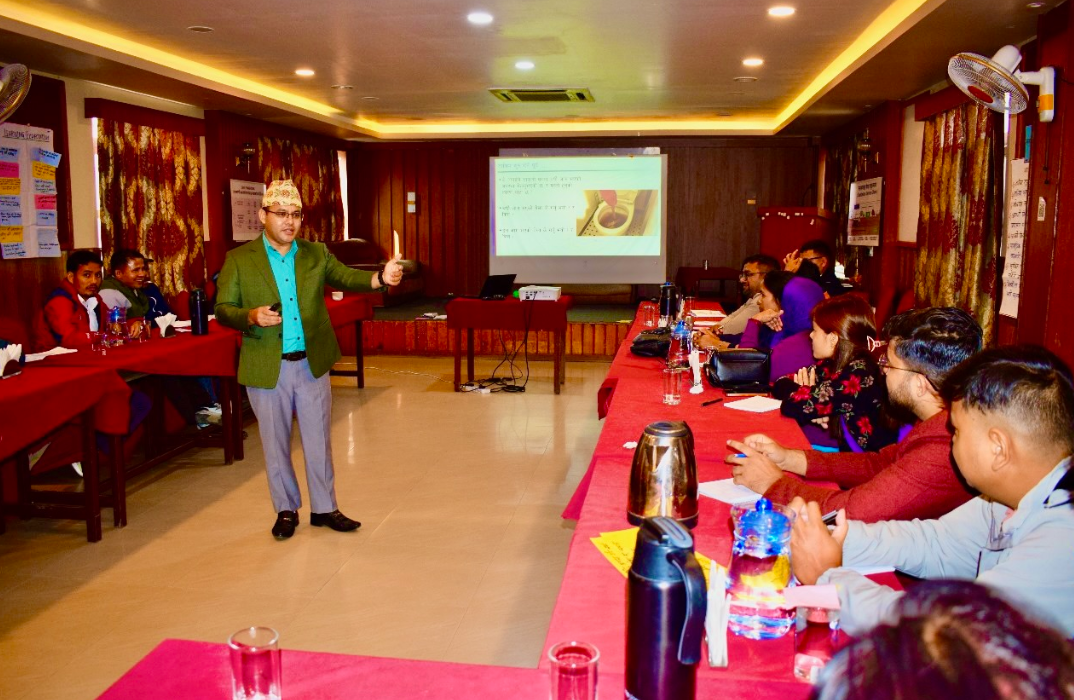
Surkhet: A province level training on the “Introduction to Citywide Inclusive Sanitation (CWIS) Approach” has been conducted in Surkhet, with the objective of strengthening participants’ understanding of inclusive, accessible, and sustainable sanitation services for all.
The training was jointly organized by the Ministry of Water Resources and Energy Development, Karnali Province; the National Water Supply and Sanitation Research, Innovation and Capacity Development Center under the Ministry of Water Supply, Government of Nepal and the Environment and Public Health Organization (ENPHO).
Held in Birendranagar, the capital of Karnali Province, the event brought together 19 participants representing the provincial offices of Dailekh, Surkhet, Jumla, and Jajarkot, along with development partner organizations.
As part of the training, participants also visited the faecal sludge treatment plant in Surkhet for an observation tour.
Participants shared that they gained a clearer understanding of the CWIS concept, noting that its implementation promotes equity, safety, and sustainability in sanitation services.
Citywide Inclusive Sanitation (CWIS) is an emerging global concept developed to address sanitation challenges in rapidly growing urban areas. It aims to ensure safe, equitable, and sustainable sanitation services for all urban residents and contributes directly to achieving Sustainable Development Goal 6.2.
The CWIS approach emphasizes accountability by clearly identifying responsible institutions or individuals during planning and implementation of urban sanitation systems. It ensures proper planning and management of required resources and prioritizes the needs of the poor, vulnerable communities, and women focusing not just on sewered or non-sewered infrastructure, but on access, safety, and sustainability for all.